

Marvel Rivals has quickly become one of the most talked-about team-based hero shooters of 2025, bringing together iconic Marvel characters in fast-paced, objective-driven battles. With its vibrant visuals, dynamic abilities, and competitive structure, the game has attracted a massive player base across platforms. However, one glaring issue has cast a shadow over its success: the game’s poor performance on PlayStation 4. From frame rate drops and stuttering to rendering failures and audio glitches, the PS4 version of Marvel Rivals has left many players frustrated and questioning the decision to support last-gen hardware. This article explores the technical shortcomings, their impact on gameplay, and the broader implications for cross-platform development.
- The Decision to Launch on PS4 Marvel Rivals’ release on PS4 was met with skepticism. The console, launched in 2013, was never designed to handle modern games with high-fidelity graphics and complex physics systems. Yet, developers pushed forward, citing accessibility and a large install base.
While the intention was noble—making the game available to as many players as possible—the execution faltered. The PS4’s aging architecture struggled to keep up with Marvel Rivals’ demands, leading to widespread performance issues from day one.
Key motivations for PS4 support:
- Expanding player base
- Leveraging existing console market
- Maintaining cross-platform parity
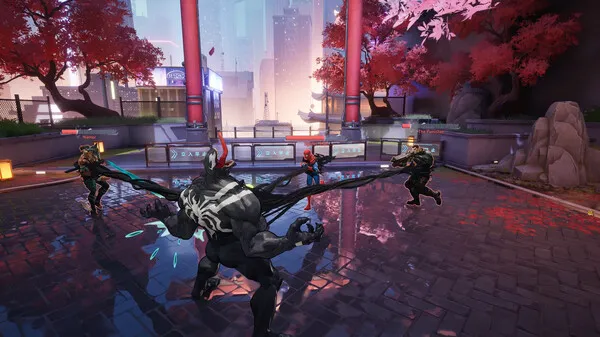
- Frame Rate Instability and Stuttering One of the most reported issues is severe frame rate instability. On base and slim PS4 models, Marvel Rivals often dips below 20 FPS, especially during teamfights or when multiple abilities are used simultaneously. In some cases, frame rates plummet to 15 FPS or lower.
This stuttering isn’t just a visual annoyance—it affects gameplay. Input lag increases, hit registration becomes unreliable, and players struggle to track fast-moving characters. Competitive integrity suffers when performance becomes a barrier to skill expression.
Frame rate consequences:
- Input delay and missed actions
- Visual confusion during fights
- Reduced reaction time and accuracy
- Rendering Failures and Texture Pop-In Beyond frame rate issues, Marvel Rivals on PS4 suffers from rendering failures. Maps, heroes, and abilities often take several seconds to load, resulting in blurry textures and missing visual effects. During character selection, players sometimes see placeholder models or blank screens.
This affects immersion and clarity. Players can’t identify enemies or allies quickly, and visual cues for abilities—like AoE indicators or ultimate animations—may not appear at all. In a game reliant on visual feedback, this is a critical flaw.
Rendering problems include:
- Low-resolution textures (often 720p or lower)
- Missing shadows and lighting effects
- Delayed model loading and pop-in
- Audio Glitches and Communication Breakdown Audio issues compound the visual problems. Voicelines and sound effects are frequently delayed, cut off, or missing entirely. This disrupts communication, especially when ultimate abilities are activated without audible warnings.
In team-based games, audio cues are essential. They signal enemy actions, coordinate team pushes, and provide feedback. Without reliable sound, players are left guessing, which leads to misplays and missed opportunities.
Common audio bugs:
- Missing ult voicelines
- Delayed sound effects
- Cut-off ambient and ability sounds
- Impact on Competitive Play Marvel Rivals is designed for competitive play, with ranked modes and tournament support. However, PS4 performance issues make it nearly impossible to compete fairly. Players on PC or newer consoles have smoother experiences, creating an uneven playing field.
This disparity discourages PS4 players from participating in ranked matches or esports events. It also skews matchmaking, as performance—not skill—becomes the deciding factor in many engagements.
Competitive drawbacks:
- Unfair matchups across platforms
- Reduced participation from PS4 users
- Skewed win/loss data due to lag
- Developer Response and Patch Attempts Developers have acknowledged the PS4 issues and released several patches aimed at improving performance1. These include adjustments to resource targets, spawn mechanics, and ability VFX. However, core problems persist.
While some fixes have helped marginally—such as reducing resource load and optimizing spawn room speed-ups—the fundamental limitations of PS4 hardware remain. Without a major overhaul or reduced graphical demands, the game continues to struggle.
Patch highlights:
- Reduced resource targets for smoother gameplay
- Adjusted jump pads for mobility-limited heroes
- Fixed specific ability bugs (e.g., Mister Fantastic’s punch hitbox)
- Community Feedback and Backlash The Marvel Rivals community has been vocal. Reddit threads, YouTube reviews, and forum posts detail the PS4 experience, often with clips showing extreme lag, broken visuals, and gameplay breakdowns3. Many players feel misled by marketing that promised parity across platforms.
Some have called for refunds, while others demand that PS4 support be dropped entirely. The backlash highlights a growing frustration with cross-platform games that fail to deliver consistent quality.
Community concerns:
- Misleading platform promises
- Lack of transparency in performance expectations
- Calls for platform-specific optimization or exclusion
- Technical Limitations of PS4 Hardware To understand the root of the issue, we must examine PS4’s technical specs. With 8GB of shared GDDR5 memory, a dated CPU, and limited GPU bandwidth, the console simply can’t handle modern rendering pipelines and physics calculations.
Marvel Rivals’ engine, designed for dynamic environments and particle-heavy abilities, overwhelms the PS4. Even with aggressive downscaling, the system bottlenecks during high-load scenarios.
Hardware constraints:
- Limited memory bandwidth
- Outdated CPU architecture
- Insufficient GPU for modern shaders
- Cross-Platform Development Challenges Marvel Rivals isn’t alone in facing cross-platform hurdles. Many games struggle to balance performance across PC, next-gen, and last-gen consoles. The challenge lies in scaling assets, optimizing code paths, and managing network latency.
Developers must choose between accessibility and quality. Supporting older hardware expands reach but risks alienating players with subpar experiences. Marvel Rivals’ PS4 launch exemplifies this dilemma.
Cross-platform trade-offs:
- Accessibility vs. performance
- Development cost vs. player satisfaction
- Fragmented user experience
- The Path Forward: Should PS4 Support Continue? As Marvel Rivals evolves, developers must decide whether to continue supporting PS4. Options include further optimization, reduced graphical fidelity, or ending support altogether. Each choice carries risks and rewards.
Ultimately, the goal should be consistent gameplay quality. If PS4 cannot deliver that, it may be time to sunset support and focus on platforms that can. Transparency and communication will be key in managing player expectations.
Possible solutions:
- Introduce “Lite Mode” for PS4
- Limit competitive modes on last-gen
- Phase out PS4 support with clear roadmap
Conclusion Marvel Rivals’ PS4 performance crisis is a cautionary tale in cross-platform development. While the game shines on newer systems, its experience on last-gen consoles is marred by lag, rendering failures, and audio glitches. These issues not only frustrate players but undermine the game’s competitive integrity. Developers must weigh the benefits of accessibility against the cost of compromised gameplay. Whether through optimization or platform prioritization, the future of Marvel Rivals depends on delivering a consistent, high-quality experience for all players.